Key Takeaways
- High-index lenses are thinner and lighter than standard plastic lenses with the same prescription.
- They often help people with prescriptions around +/- 4.00 or higher.
- Higher index numbers, like 1.67 and 1.74, mean slimmer lenses.
- Polycarbonate lenses suit active kids and outdoor adventures thanks to their impact resistance.
- An anti-reflective coating can help reduce glare on high-index lenses.
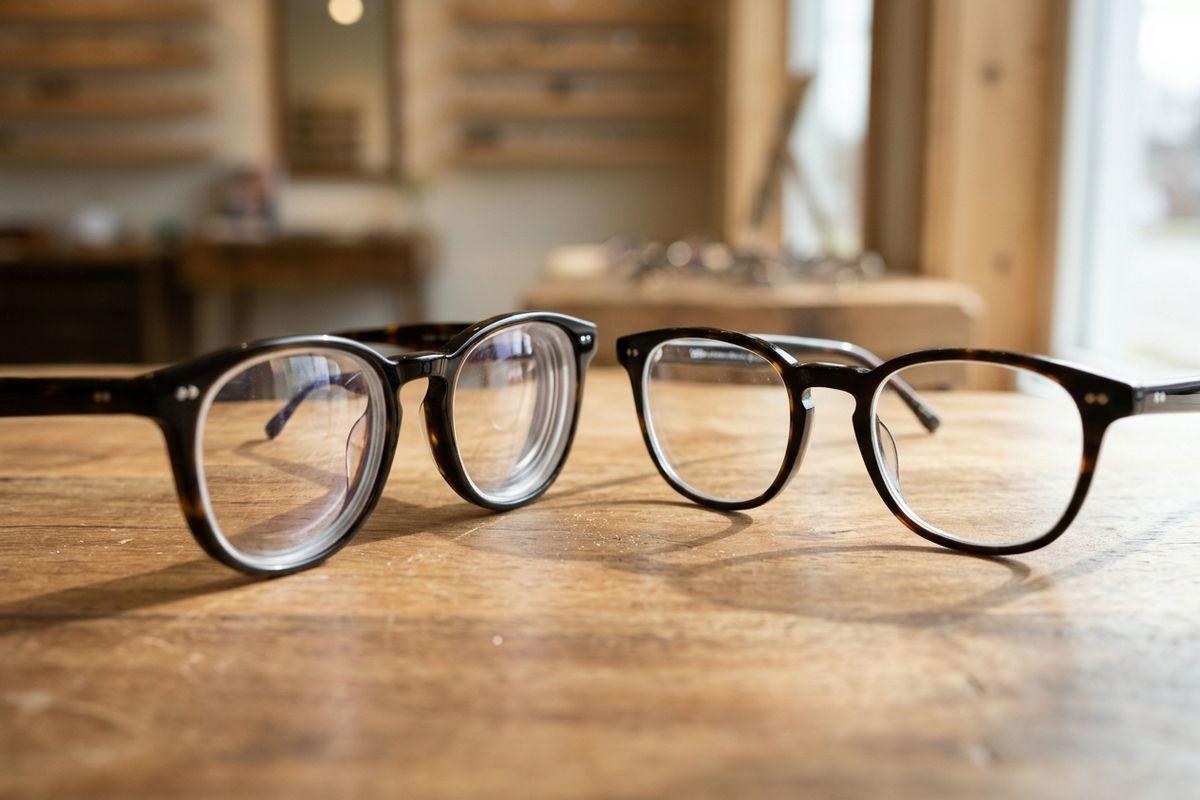
You finally found the frames. They’re bold, they’re fun, and they look like you. Then the lenses arrive, and the edges stick out like the bottom of a soda bottle. Oops. The team at Impressive Eyes Optical hears this story a lot, and the fix can be simpler than you’d expect.
High-index lenses are made from materials that bend light more efficiently, so they can correct your vision with a thinner, lighter lens than standard plastic. At Impressive Eyes Optical, the team grinds lenses in-house, so they can shape your new pair to fit the frames you picked.
What Does “High-Index” Mean for Glasses?
“Index” is short for refractive index, a number that describes how much a material bends light as it passes through. Standard plastic lenses sit around 1.50.
High-index lenses are denser, so they can bend light the same amount with less material. The higher the number, the slimmer your lens can be.
Why Some Lenses Look Thick
Stronger prescriptions need more curve, and more curve usually adds thickness. Where that thickness shows up depends on how your eyes focus:
- If you’re nearsighted, meaning faraway things look blurry, your lenses are thin in the center and thicker at the edges.
- If you’re farsighted, meaning up-close things are harder to see, your lenses are thickest in the center, which can create the “owl eye” look.
Who Can Benefit from High-Index Lenses?
High-index lenses may be worth a look if any of these sound familiar:
- Your lens edges stick out past your frames
- Your glasses feel heavy by lunchtime
- You love big statement frames, which need bigger lenses
- You wear your glasses all day for work or school
A lighter lens can mean fewer red marks on your nose and fewer slides down your face while you’re helping with homework. If your prescription is mild and thickness doesn’t bother you, standard plastic lenses may suit you just fine.
What Do Lens Index Numbers Mean?
Each index number tends to suit a different prescription range. Here’s a quick look at the index numbers you’ll hear about:
- A 1.50 lens is standard plastic and works well for mild prescriptions.
- A 1.67 lens is high-index and often handles prescriptions up to about +/- 6.00.
- A 1.74 lens is ultra high-index and suits very strong prescriptions.
High-Index Vs Polycarbonate
Polycarbonate lenses are thinner than standard plastic and hold up well to bumps and drops, which makes them a common pick for kids’ glasses and sports.
Polycarbonate can suit soccer practice and kids who treat every curb like a balance beam. Some high-index plastics can be less impact-resistant than polycarbonate, so tell your optician about your kid’s activities before you choose. If a slim, light lens for a strong prescription matters most to you, high-index may suit you better.

Pros and Cons of High-Index Lenses
Let’s look at high-index lenses from all angles.
The Perks
From the side, high-index lenses have a slimmer profile with less lens “pop.” They feel lighter on long days. They also give rimless or semi-rimless frames a cleaner look.
Tradeoffs to Know
High-index lenses usually cost more than standard plastic. With very strong prescriptions, you might notice faint color fringes near the edges of the lens. They can also show more glare, so an anti-reflective coating helps cut those reflections during night drives and video calls.
Scratches and UV Protection
A scratch-resistant coating helps your lenses hold up to backpacks, cup holders, and toddler fingers. Clean them gently with a microfiber cloth instead of your shirt.
UV protection varies by material and coating, so ask the team what your lenses include.
How Can Your Frames Help Keep Lenses Thin?
Frames with smaller lens openings can keep the edges thinner, and full-rim frames can hide thicker edges. Very tiny frames may not support a heavier lens, so aim for a size that fits your face.
A good fit can spread weight evenly across your nose and ears. That way, your glasses can stay put from school drop-off to bedtime stories.
Find Your Lens Match
If it’s been a while since your last eye exam, start with an updated prescription. Your optometrist can check your vision, and our opticians can walk you through standard and high-index options side by side.
Already picked out a pair of bold frames? Bring them in, or try on a few more with the team at Impressive Eyes Optical.
Schedule your visit, and we’ll help you pick a lens that keeps your new look light.