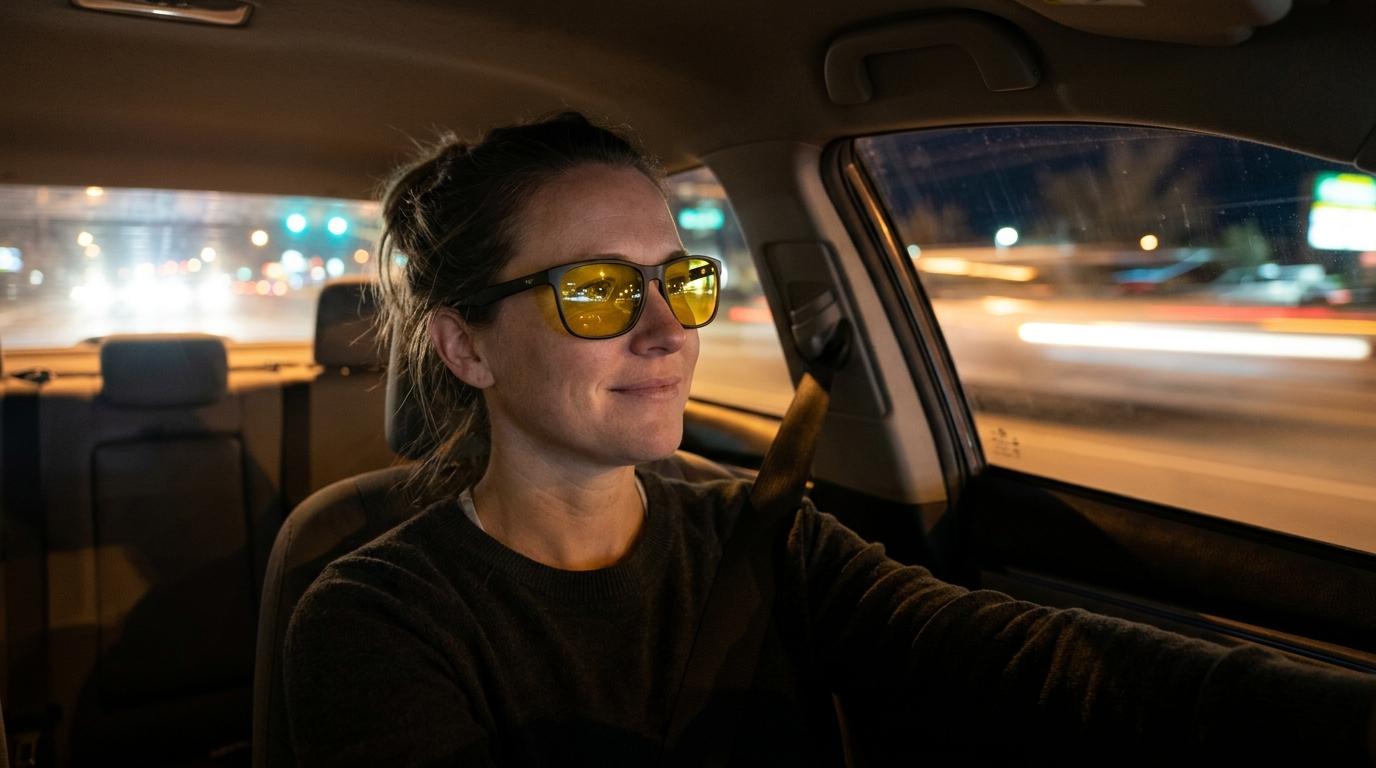
You’ve probably seen them at the grocery store checkout or scrolling through your social media feed. Night driving glasses seem to be everywhere right now. They’re usually tinted yellow or amber, and they promise to cut through headlight glare and make nighttime roads feel safer. The idea sounds appealing, but at Impressive Eyes Optical, we know that you might be wondering if they actually work.
Night driving glasses are not a proven solution for most drivers, and in some cases, they can actually make things harder to see. That doesn’t mean they’re useless for everyone, but without much proven benefit, any help they provide is strictly related to comfort, not clear sight.
What the Research Says About Night Driving Glasses
The Case Against Yellow Lenses
Here’s the catch with yellow tints: Any tint, even a light one, blocks some light from reaching your eyes. At night, you’re already working with very little light, and a tinted lens takes some of that away, which can actually reduce how clearly you see dark roads and objects. A clinical study found that night-driving glasses did not improve a driver’s ability to detect pedestrians at night.
Where They Might Help
That said, some drivers genuinely feel more comfortable wearing them. If bright oncoming headlights leave you feeling dazzled or uncomfortable, a yellow lens may make you feel more comfortable. The most important part of this conversation is how you feel.
Comfort and actual visual performance aren’t always the same thing. Feeling less bothered by glare doesn’t automatically mean you’re seeing more clearly or reacting faster. That doesn’t mean it’s not important to feel comfortable: It just means that the 2 concepts shouldn’t be confused with each other.
Why Your Night Vision Might Already Be Struggling
Common Conditions That Affect Night Vision
If night driving feels harder than it used to, there can be a reason that goes beyond the glasses on your face. Cataracts, for example, scatter light as it enters the eye, which can create that hazy, blurry experience you might notice around streetlights or headlights.
Uncorrected nearsightedness or astigmatism can also make nighttime driving feel like looking through a smudged window. These aren’t problems a tinted lens can fix.
Everyday Habits That Make Night Driving Worse
Some of what makes night driving difficult comes down to habits and environment. Looking directly at bright oncoming headlights causes your pupils to shrink quickly, and it takes time for your eyes to adjust back to the darkness around you. A dirty windshield scatters that same light even more, turning every oncoming car into a starburst. Misaligned headlights on your own vehicle can also limit how well you see the road ahead.
The Downsides of Night Driving Glasses
Before purchasing something, it’s important to know the possible downsides of the product. For tinted lenses, these could be:
- Darker tints reduce the total light reaching your eyes in already dim conditions, affecting how clearly you see the road.
- They don’t address any underlying causes of poor night vision, whether that’s a prescription issue or an eye health concern.
- For drivers without an underlying vision condition, research hasn’t shown a clear benefit, so you could buy something that may make things worse.
Grabbing a pair off the rack at a grocery store or gas station might feel like a quick fix, but it can give you a false sense of security without actually improving what matters most: How clearly you can see what’s on the road. Knowing how long your prescription glasses last is also worth thinking about, since worn lenses or an outdated prescription can quietly make nighttime visibility worse over time.

What Can Actually Help with Night Driving and Glare
The Right Lenses Make a Real Difference
Clear lenses with a quality anti-reflective coating are 1 of the most practical options for reducing headlight glare without sacrificing light. Unlike a tinted lens, they let in the full amount of light while cutting down on the scattered reflections that make glare so uncomfortable.
If your prescription is even slightly off, updated lenses can sharpen contrast and help edges look more defined, which matters a lot when you’re reading road signs in the dark. Our team at Impressive Eyes Optical can walk you through frames and lens options that are matched to how you actually use your eyes every day.
When to See an Optometrist
If night driving feels genuinely difficult, that’s probably your eyes telling you something worth paying attention to. A comprehensive eye exam can help identify whether a changed prescription, early cataracts, or another factor is behind what you’re experiencing.
A personalized lens solution, chosen with your specific vision in mind, is likely going to do more for you than a 1-size-fits-all product off a shelf.
See Clearly, Drive Safely
Night driving glasses have a certain appeal, and for some people, they might take the edge off glare discomfort. But for most drivers, they’re not the answer. The better path starts with knowing what’s actually affecting your vision. If you’re looking for real answers, not quick fixes, we’d love to see you. Schedule your eye exam today, and let’s make sure you feel confident on the road.